Rust, how a 40,000-hour trio controls a server and what it teaches about dominance
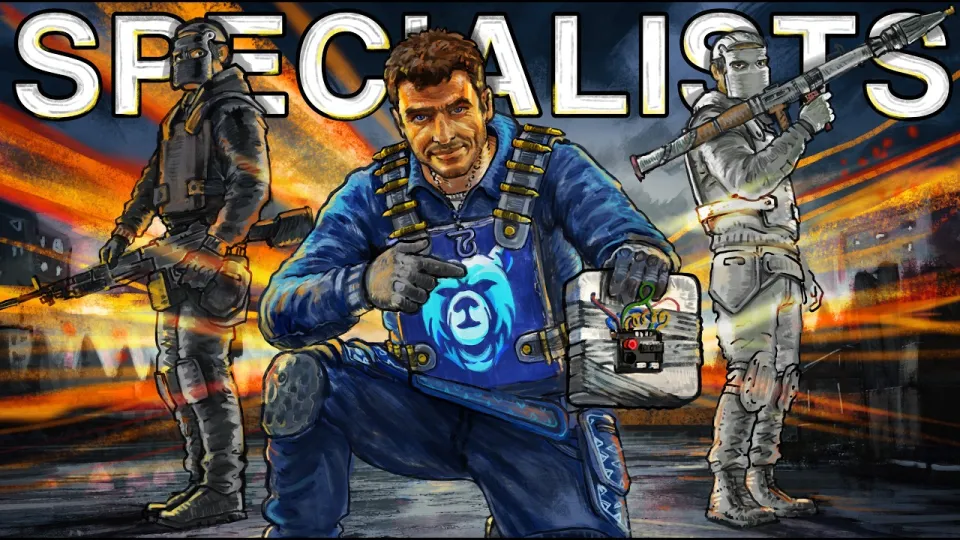
Video: How a 40,000-Hour Trio CONTROLS a SERVER - Rust
Need articles like this for your video? They help promote it on YouTube and Google — order them in the Telegram bot @sat_sit_bot. Articles with your video embedded are written and posted by the bot itself — on popular topical sites (no ads). Free trial — 50 articles.
A 40,000-hour trio controls a Rust server by converting raw playtime into speed: they reach competitive gear before most groups finish their first base, pick fights on their own terms and raid the competition before it can organise. In Blooprint's wipe on a 500+ population server, that approach turned a start without major ambitions into full map dominance. You can follow the same sessions live on Blooprint's Twitch channel.
What 40,000 hours actually buys in Rust
Playtime in Rust is not a cosmetic badge; it is compressed decision-making. A trio with tens of thousands of hours between them does not need to debate every furnace split or every door placement, so the boring early phase collapses into minutes instead of hours. Blooprint, Disfigure and Nine have spent enough wipes together that their defaults align: who farms, who scouts, who holds the core and who crafts.
The practical result is tempo. On a 500+ pop server, the first hours decide whether you are the group knocking on doors or the group answering them. Experience shortens the gap between spawning on the beach and holding a compound, and it keeps the trio from losing gear to avoidable mistakes like over-roaming without a fallback or stacking loot in one obvious room.
How the trio takes control of a high-pop server
Control on a Rust server is a sequence of small monopolies, not a single raid. The trio's pattern is to secure a farming radius, deny the same resources to neighbours and then convert surplus into raid tools. On a server with hundreds of players, the group that consistently wins the first fights around monuments sets the price of every later encounter.
- Fast start. Prioritise a compact, defensible base over a showpiece. A small footprint with layered doors is cheaper to secure and faster to expand.
- Scout before you commit. Knowing which neighbours are solos, which are groups and which are already raiding lets you choose fights you can finish.
- Share the economy. In a trio, one player farming while two roam is inefficient; rotating roles keeps sulfur, scrap and components flowing without leaving the base blind.
- Raid the competition, not the map. Targeting the groups most likely to challenge you removes future problems and supplies the explosives for the next step.
- Keep pressure. On high-pop servers, a group that stops moving loses its edge within a day as rivals catch up in gear.
The escalation from a quiet wipe to raiding all of the competition is typical of this pattern: each successful raid funds the next one, and each defeated neighbour reduces the number of players who can coordinate against you.
Raid economics and the online-raid problem
Raiding in Rust is an economic decision before it is a combat one. Sulfur, gunpowder and explosive costs have to be weighed against the loot behind the wall, and a trio that raids everything it can see goes broke. Experienced groups pick targets where the expected return justifies the investment, and they treat online raids — defences where the owners are present — as the real test.
An online raid changes the math because the defenders can repair, counter-raid and call allies. The trio's advantage is preparation: scouting the base layout, counting doors, staging a forward base and keeping enough explosives in reserve to finish the job if the first push stalls. Comments from viewers of the video highlight exactly this tension, praising the willingness to take fights and mocking the moments when a raid goes sideways. The lesson for smaller groups is simple: never start an online raid without a plan for the second wave.
What the viewer comments reveal about Rust in 2026
The audience reaction to Blooprint's wipe is a useful snapshot of how Rust players think about the game right now. Several viewers describe never having played Rust yet following entire wipes as stories, which shows how much of the game's appeal is narrative rather than mechanical. Others ask about the trio's old line-ups and express nostalgia for earlier combinations, a reminder that group chemistry is part of the content.
A recurring theme is gear fear. One comment praises players who roam with high-tier weapons instead of leaving them in a box, and that observation matches the trio's behaviour: gear that stays in the base produces nothing. Another viewer questions how certain players suddenly became accurate in fights, which is the eternal Rust suspicion around any dominant group. The honest answer is that on a 500+ pop server, map knowledge and crosshair placement from thousands of hours look like cheating to anyone seeing them for the first time.
Practical takeaways for trios trying to dominate
A trio does not need 40,000 hours to improve its server position, but it does need the habits those hours produce. The most transferable ones are discipline around base design, willingness to fight with the gear you have and a clear division of labour during raids.
- Build small first, expand after the first successful raid rather than before it.
- Keep one player responsible for the base and crafting during fights, and rotate that role every session.
- Track your sulfur budget before a raid; if you cannot finish two layers, farm more.
- Scout a target's activity pattern instead of attacking the moment you have explosives.
- Review every lost fight for positioning errors rather than blaming luck.
These are the same principles that let Blooprint's group turn a low-ambition wipe into control of the competition, and they scale down to duos and solos as well.
Useful links
- Blooprint on Twitch — live Rust sessions and wipe progress.
- Blooprint on Kick — alternative streaming platform.
- Blooprint on TikTok — short clips and highlights.
- Blooprint on Twitter — announcements and updates.
- Blooprint's Discord — community and group-finding.
Final thoughts
A 40,000-hour trio controls a Rust server because experience converts directly into tempo, target selection and raid discipline, not because of any single trick. Blooprint's wipe shows the full chain: a fast start, a compact base, aggressive but calculated raiding and the willingness to defend what you take. The channel Blooprint builds these stories wipe after wipe, and the pattern is repeatable for any group willing to trade gear fear for pressure. If you want to see the next one unfold live, follow Blooprint on Twitch.
Key takeaways
- Blooprint, Disfigure and Nine bring a combined 40,000 hours to a 500+ population Rust server.
- The wipe starts without major ambitions but escalates into full competition raiding.
- Early control comes from fast progression, not from a pre-planned mega-base.
- Online raids and base defense decide who keeps the loot on a high-pop server.
- The trio's edge is coordination: shared loot, split roles and constant scouting.
Source: How a 40,000-Hour Trio CONTROLS a SERVER - Rust · Markdown version
Questions & answers
How does a trio with 40,000 hours control a whole Rust server?
By converting experience into speed and discipline. The trio reaches competitive gear faster than most groups, chooses fights it can win, and raids rivals before they can organise. Each successful raid funds the next, so control compounds over the wipe.
Is it worth roaming with high-tier gear in Rust or should you save it?
Gear stored in a base produces nothing. On a high-pop server, roaming with the best weapons you have creates opportunities for loot and map control, while gear fear hands the initiative to other groups. The risk is real, but experienced players mitigate it with scouting and short, planned routes.
What makes online raids different from offline raids in Rust?
In an online raid the defenders can repair, counter-attack and call allies, so the attacker needs a forward base, spare explosives and a plan for a second wave. Offline raids are mostly an economic calculation; online raids test coordination and decision-making under pressure.
Can a new Rust player learn from watching a 40,000-hour trio?
Yes, mainly through habits rather than mechanics. Watch how the trio splits roles, when it commits to a fight and how it budgets sulfur before a raid. Those decisions transfer to smaller groups even if your aim and game sense are still developing.